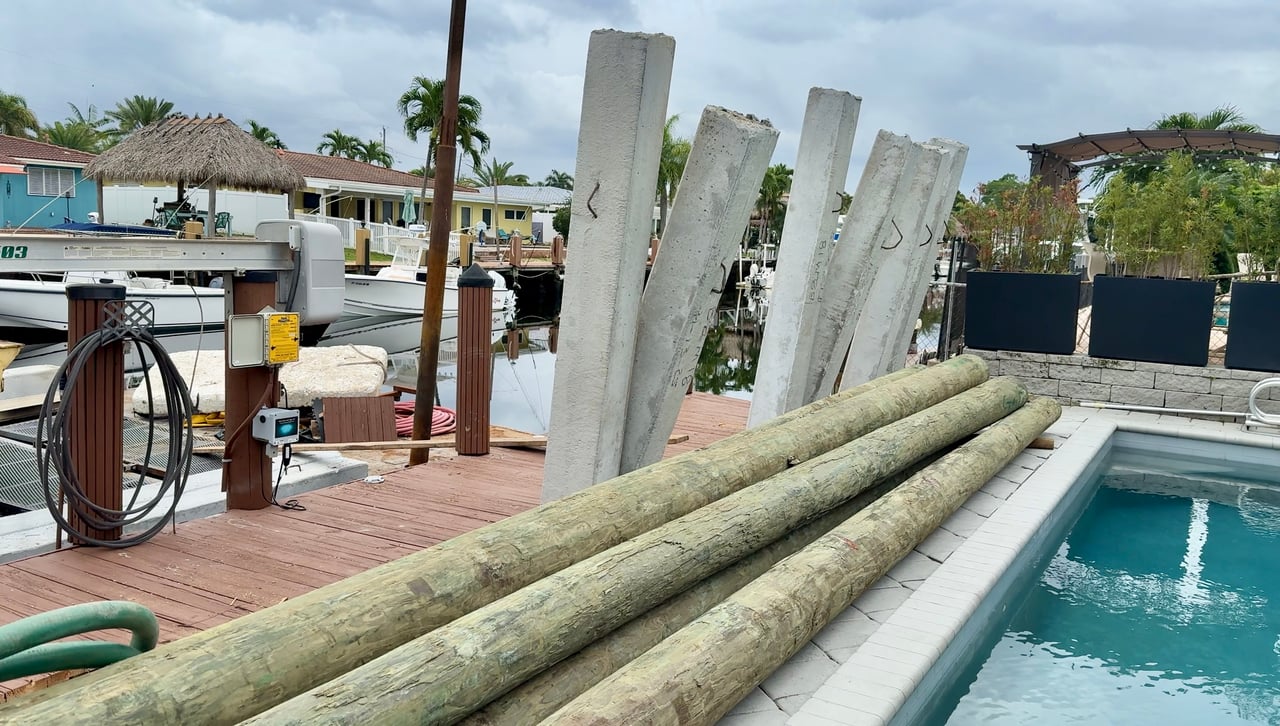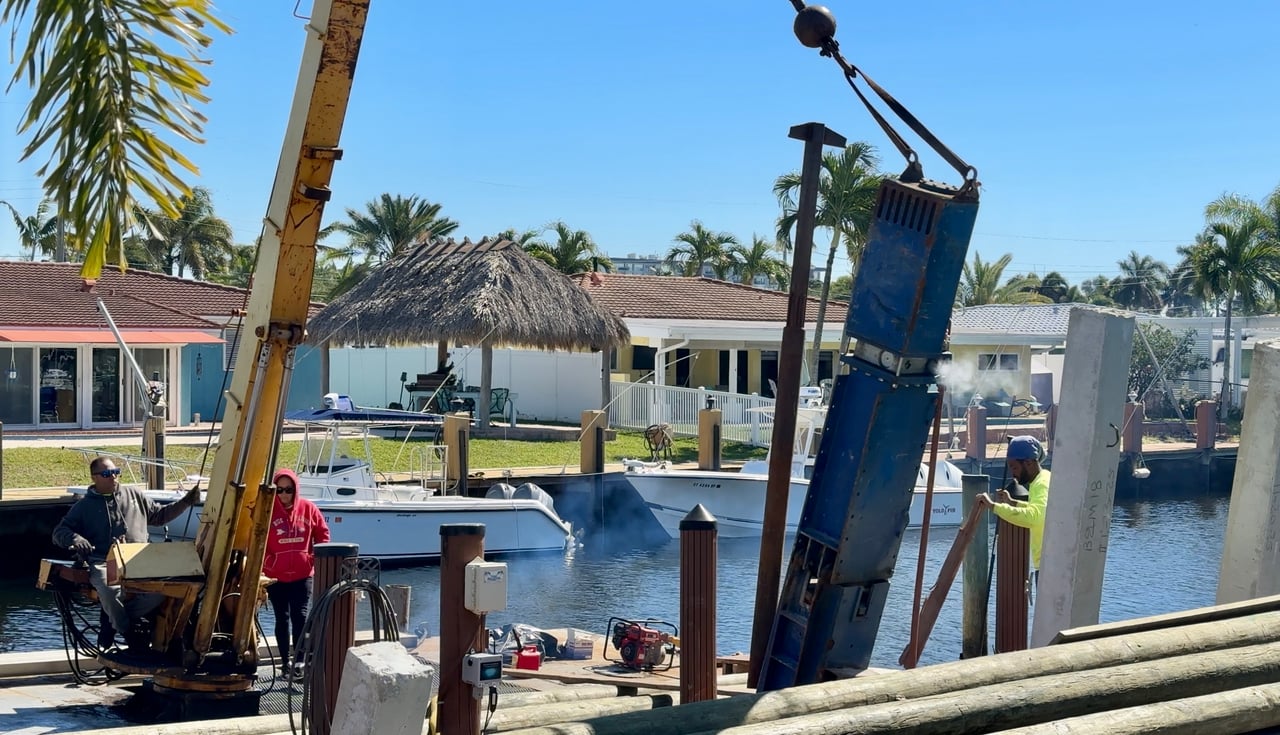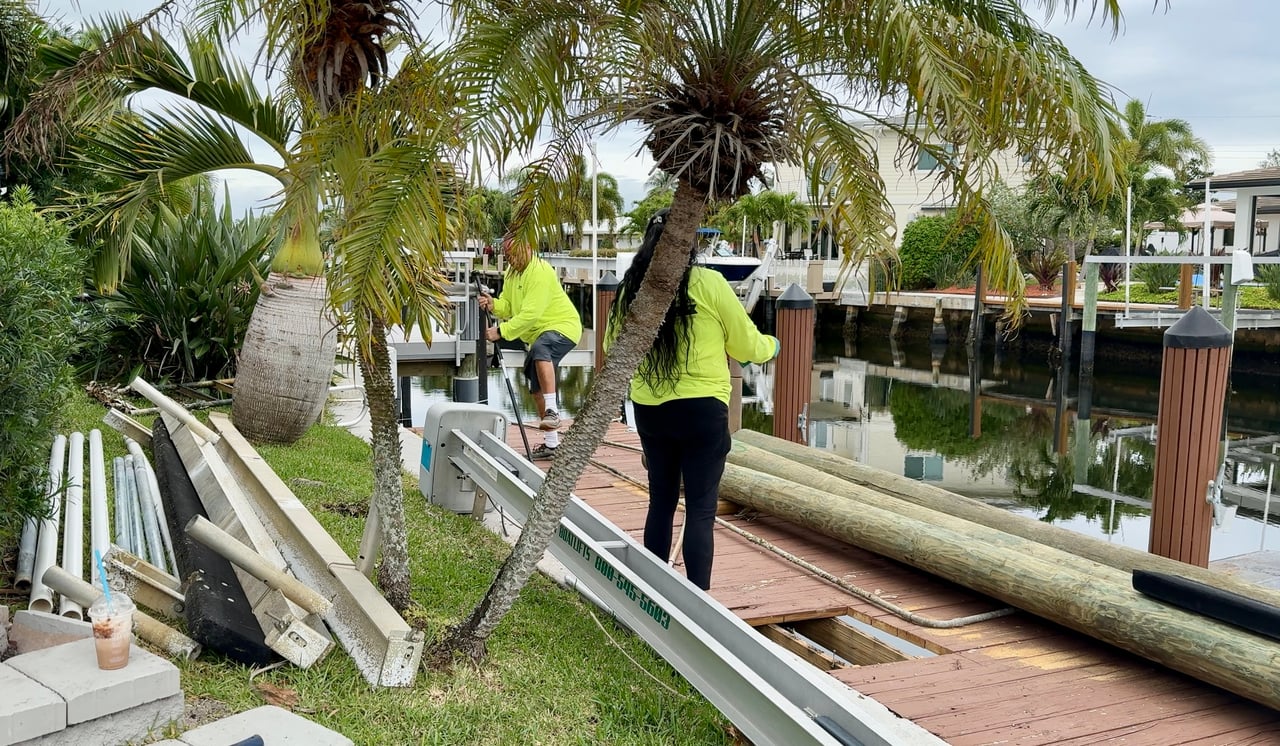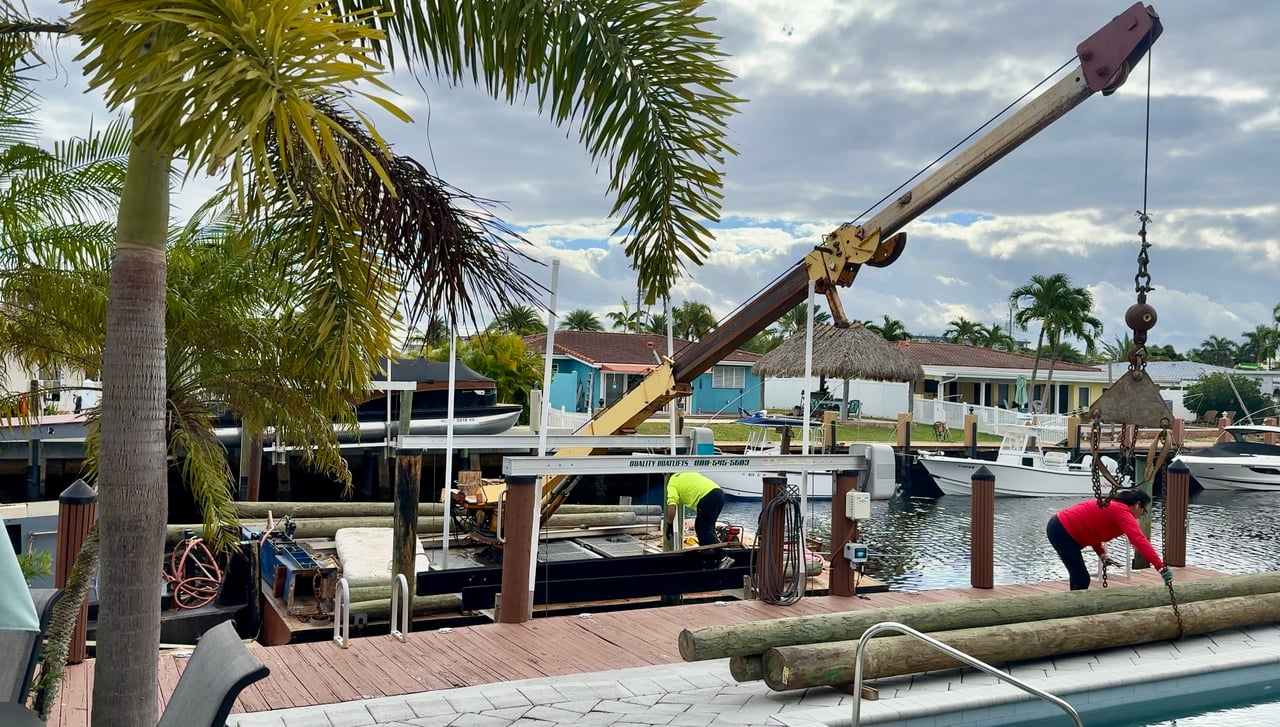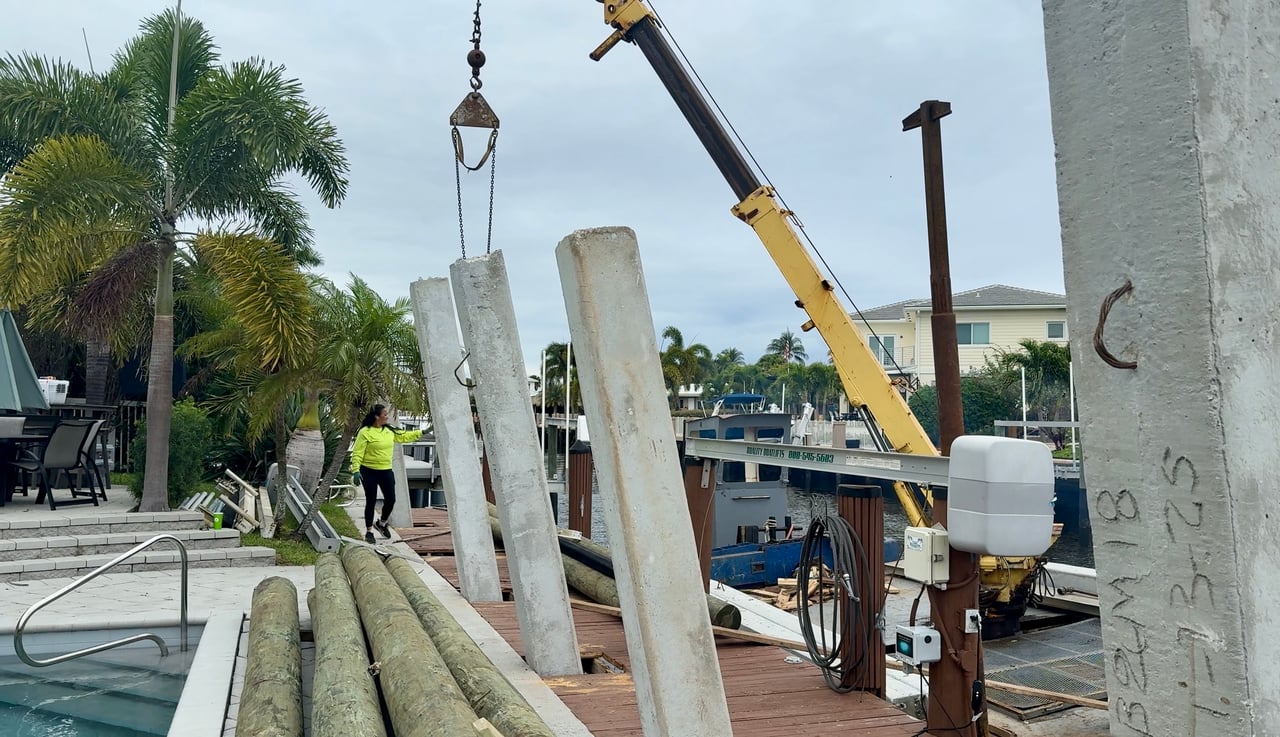
A New Era of Waterfront Living in South Florida
What buyers and sellers need to know about seawalls, docks, and boat lifts from West Palm Beach to Fort Lauderdale
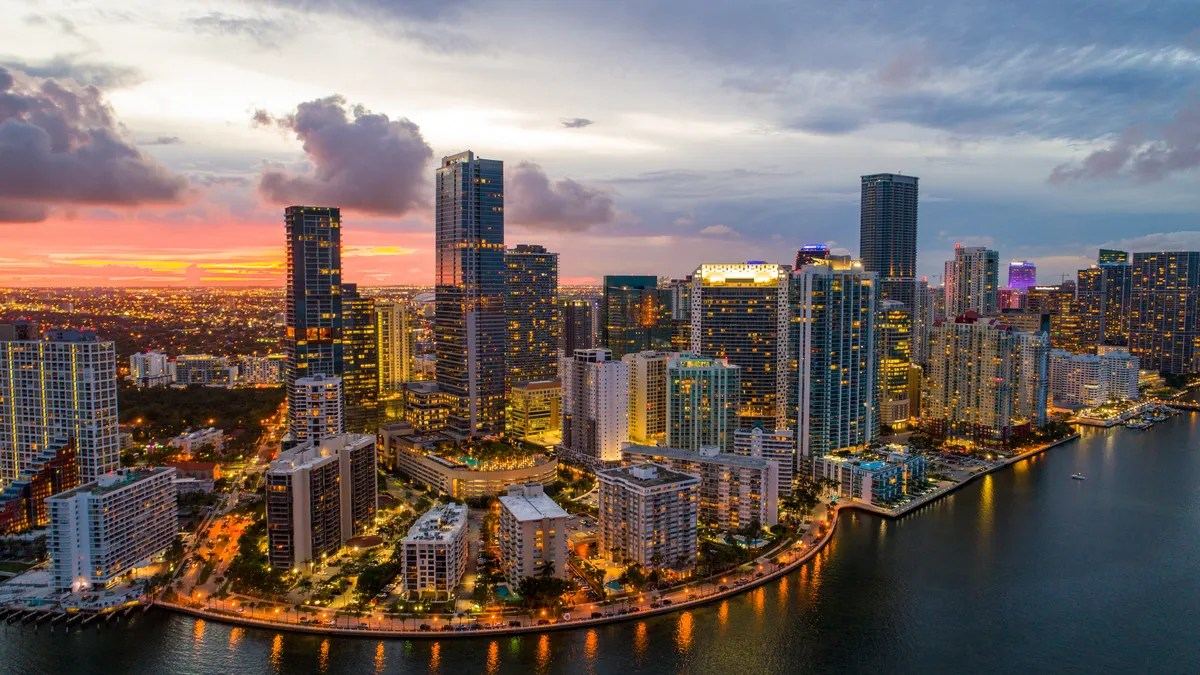
Waterfront real estate across South Florida is entering a completely new chapter.
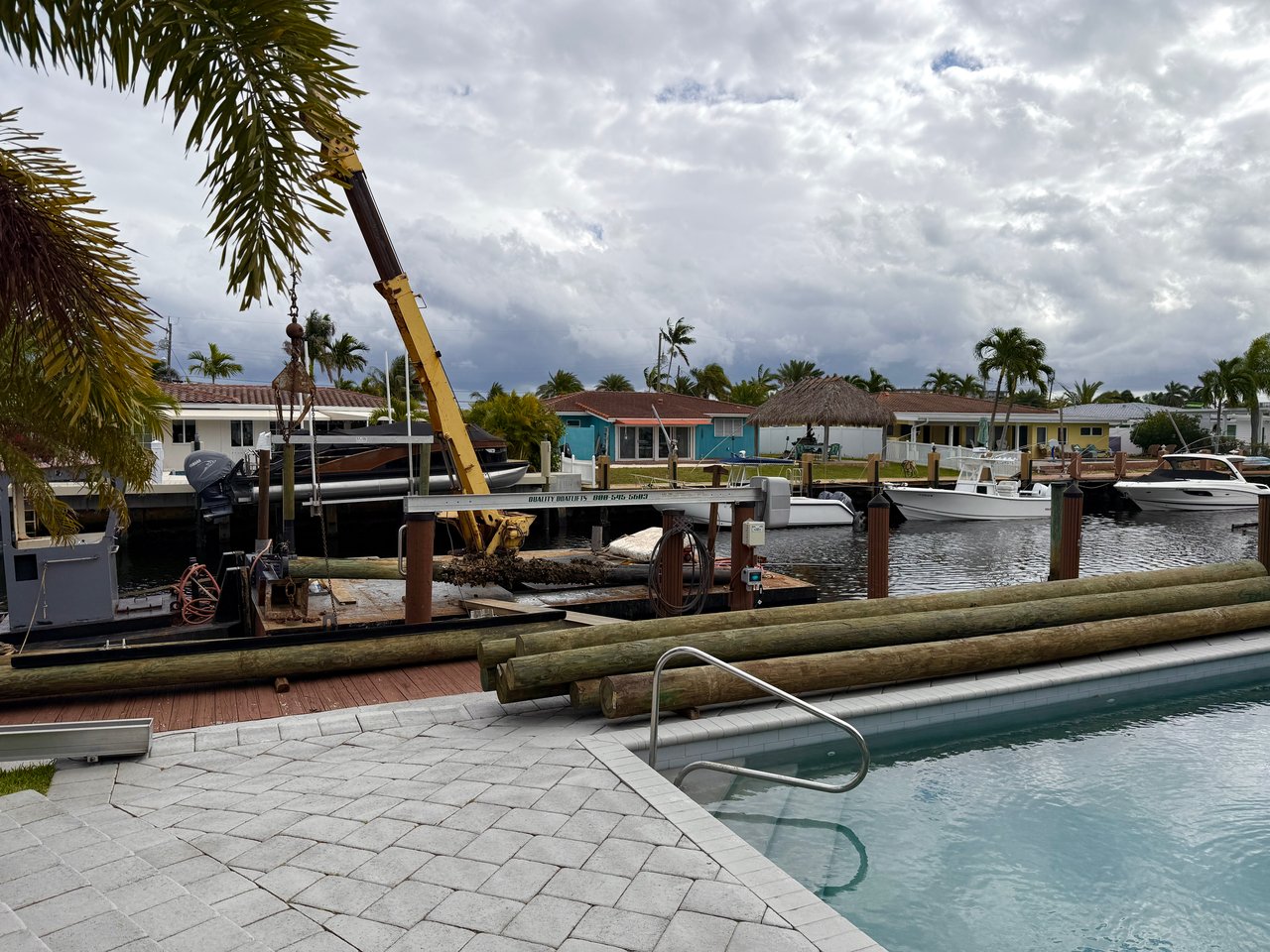
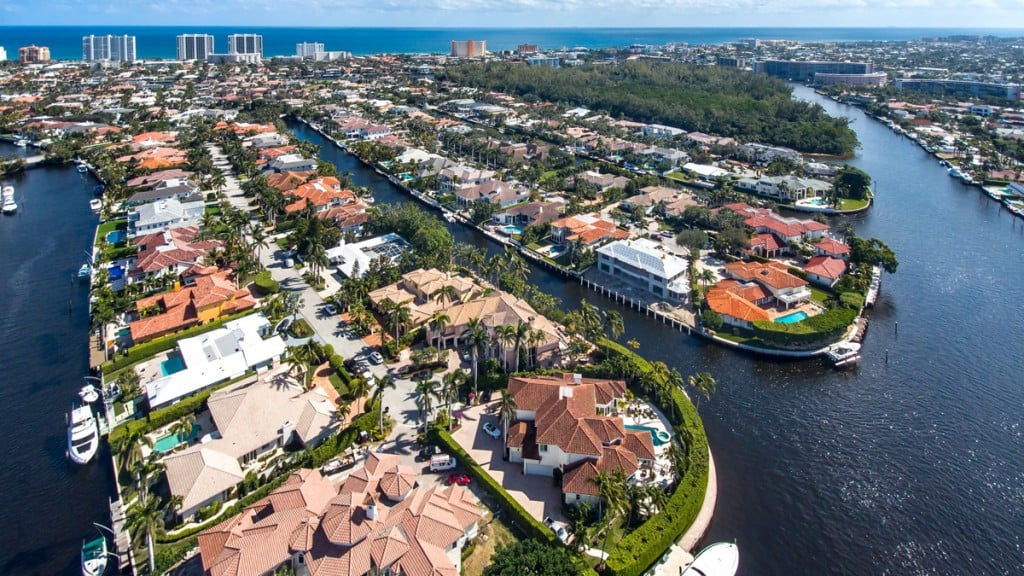
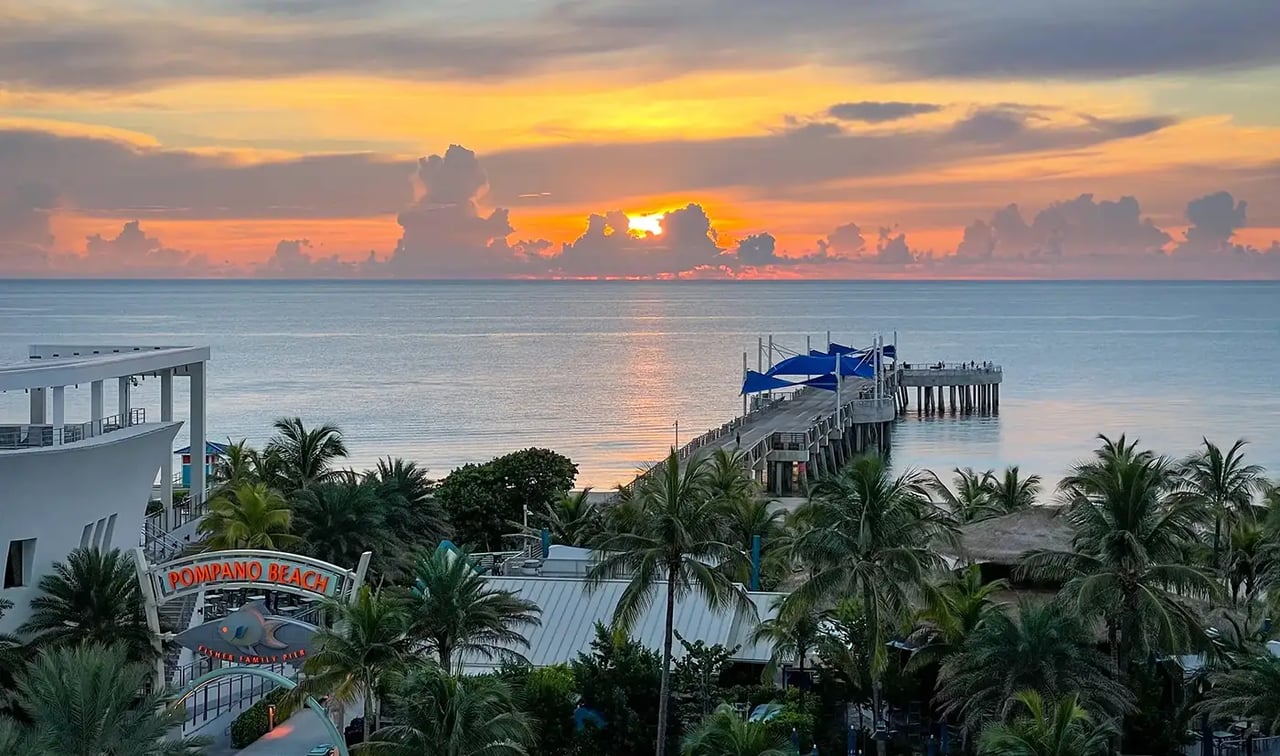
From West Palm Beach down through Fort Lauderdale, and especially in communities such as Pompano Beach and Lighthouse Point, buyers and sellers are learning that owning on the water today is not only about the home. It is also about the infrastructure that protects the property and supports the lifestyle.
Many waterfront homeowners in this region purchased their homes 25 to 35 years ago for $300,000 to $600,000. At the time, the seawall, dock, and boat lift were considered standard features. Today, in many neighborhoods, the land alone is worth $1.2 million to $3 million or more.
That shift in value has brought a new level of regulation, responsibility, and planning for anyone buying or selling on the water.
Waterfront rules have changed across South Florida
Across both Broward and Palm Beach counties, cities have updated their seawall and tidal barrier standards to address tidal flooding, king tides, and long-term sea level change.
For most properties along the West Palm Beach to Fort Lauderdale corridor, new seawalls or full replacements must now be built to higher elevation standards than the walls installed decades ago. In real terms, this means:
-
An older seawall that looks “fine” may not meet current code if it needs to be rebuilt
-
Larger repairs can trigger a full replacement instead of a simple patch
-
Engineering and permitting are now a normal part of waterfront ownership
This applies whether the home sits on the Intracoastal, a wide turning basin, or a narrow residential canal.
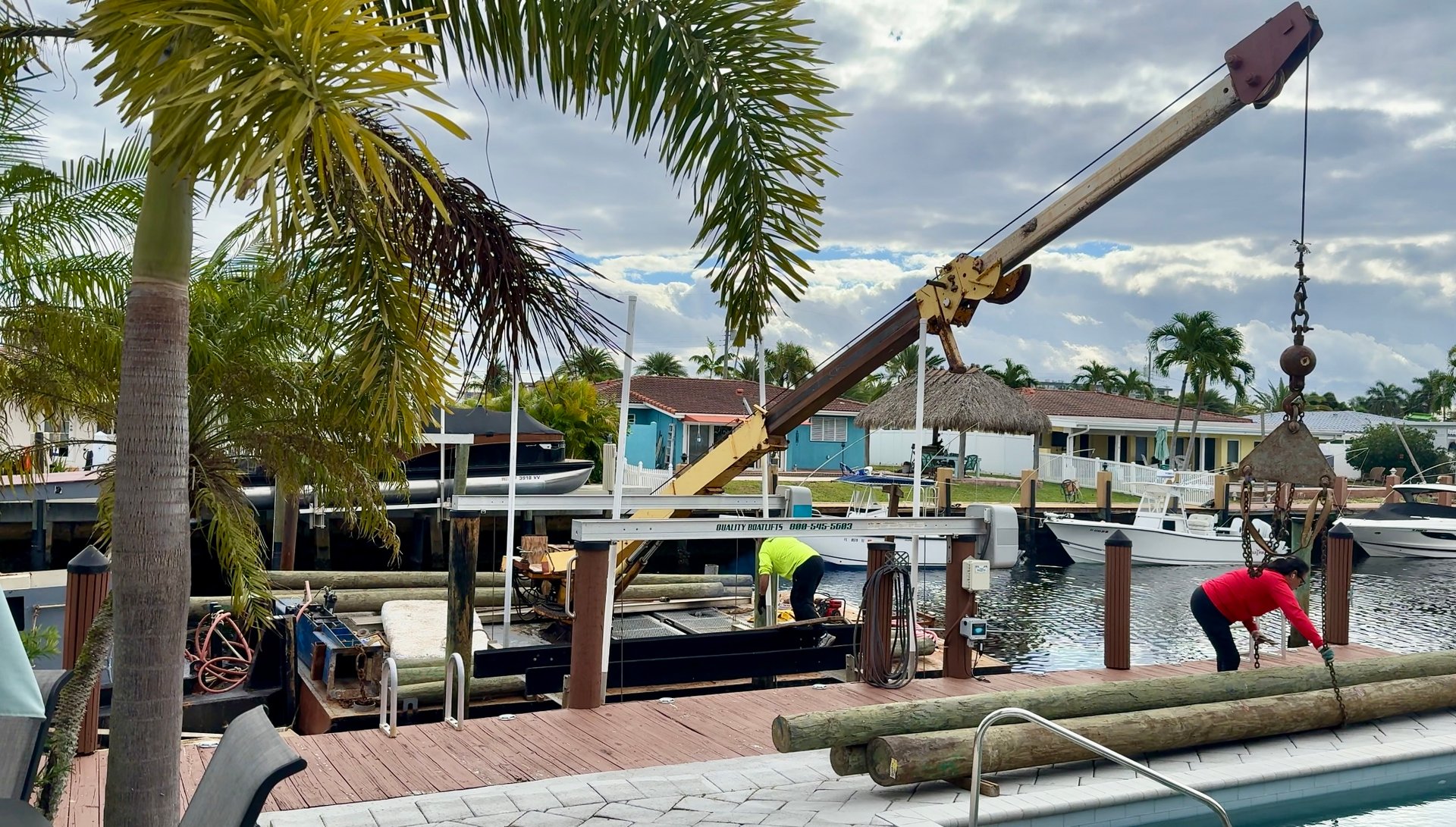
What buyers should understand before purchasing a waterfront home
If you are buying on the water anywhere from West Palm Beach through Fort Lauderdale, your due diligence should go beyond the house itself.
You should be asking:
-
How old is the seawall
-
Has it ever been replaced or raised
-
Were past repairs properly permitted
-
Is there visible cracking, leaning, or soil loss behind the wall
-
Would today’s standards require the wall to be higher if it were replaced
Many existing seawalls across South Florida are reaching the end of their original design life. When replacement becomes necessary, the cost is often far higher than buyers expect.
Docks and boat lifts deserve the same level of scrutiny.
Before assuming you can bring your boat with you, confirm:
-
allowable dock size and configuration
-
required setbacks from side property lines
-
canal width rules that limit how far structures and vessels may extend into the waterway
-
whether a lift is permitted for the size and weight of your boat
These details directly affect what kind of boating lifestyle the property can realistically support.
What sellers should consider before listing
For long-time owners, infrastructure is now one of the most important decisions to make before going to market.
Some sellers choose to sell as is and allow buyers to evaluate future upgrades on their own. Others decide to invest in inspections or selective improvements to reduce uncertainty during negotiations.
Before listing, sellers should strongly consider:
-
ordering a professional seawall inspection
-
gathering past permits and engineering documents
-
verifying whether previous dock or lift work was completed legally
-
understanding whether deferred maintenance is likely to become a negotiation issue
Today’s waterfront buyers are far more educated about infrastructure risk than they were even a few years ago. Clear documentation builds confidence and often shortens the transaction timeline.
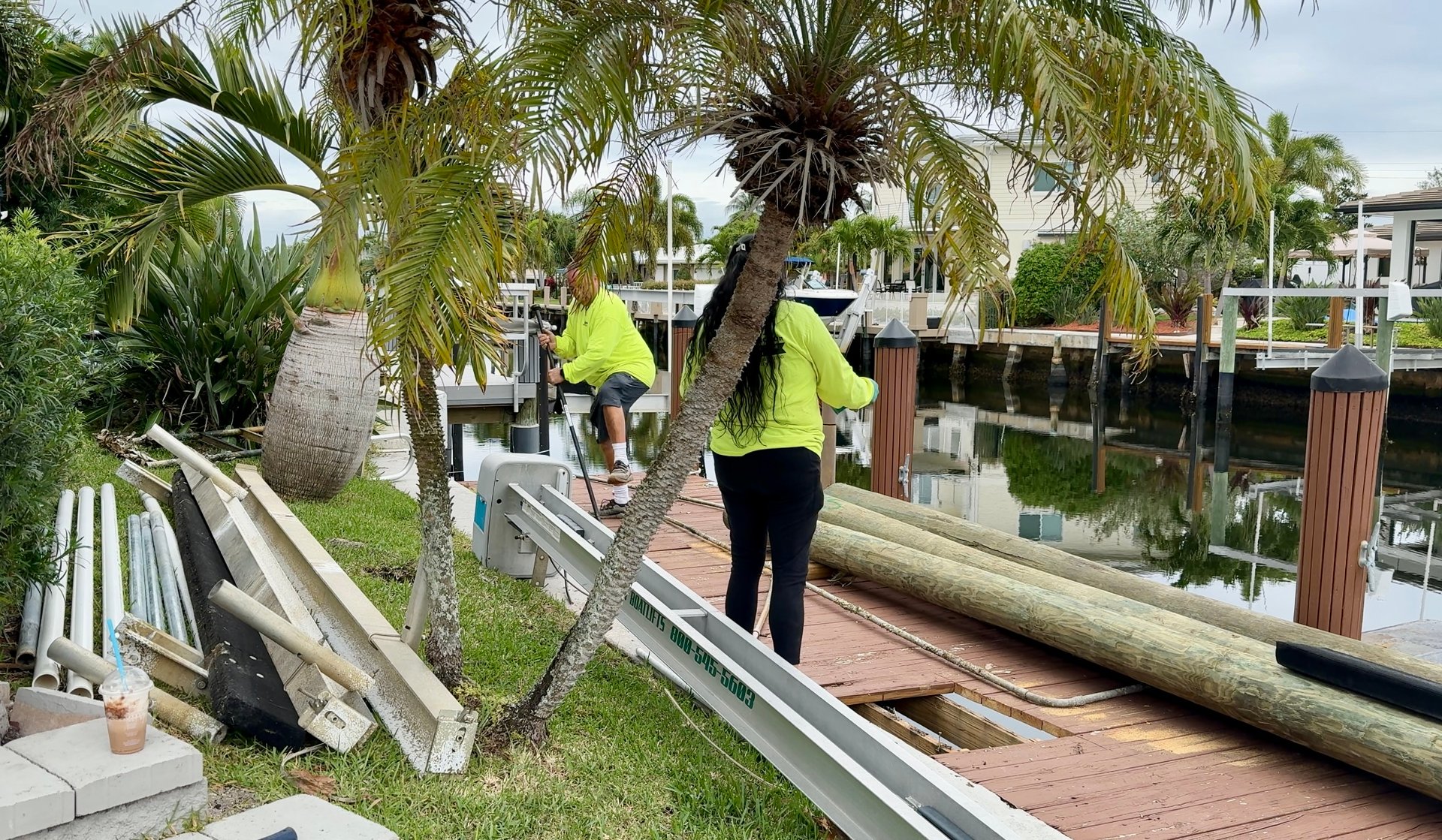
What does it actually cost to replace a seawall, dock, or boat lift today?
One of the biggest surprises for both buyers and longtime owners is how much waterfront construction has changed in both scope and price.
Below are realistic starting ranges commonly seen today for residential properties across the West Palm Beach to Fort Lauderdale waterfront corridor.
Seawall replacement
Typical starting range
$1,200 to $2,000 per linear foot
Most residential projects fall between
$80,000 and $180,000 or more
Final pricing depends on:
-
total linear footage
-
access for equipment and barges
-
soil conditions
-
wall type and cap design
-
tiebacks or additional stabilization
-
the elevation required under current code
For homes with 60 to 100 feet of frontage, full replacement is now a major capital project.
Dock replacement or major rebuild
Typical starting range
$30,000 to $90,000 or more
Pricing varies based on:
-
concrete versus composite decking
-
number of pilings
-
dock length and width
-
lighting and utility pedestals
-
structural upgrades required to meet current engineering standards
In many cases, older docks cannot simply be repaired. If key structural elements are failing, a redesign and rebuild is often required.
Boat lift installation or replacement
Typical starting range
$12,000 to $25,000 or more
Pricing depends on:
-
weight capacity
-
cradle style
-
motors and control systems
-
electrical upgrades
-
piling requirements
Modern boats are heavier than those sold decades ago. Many older lifts are undersized for today’s vessels.
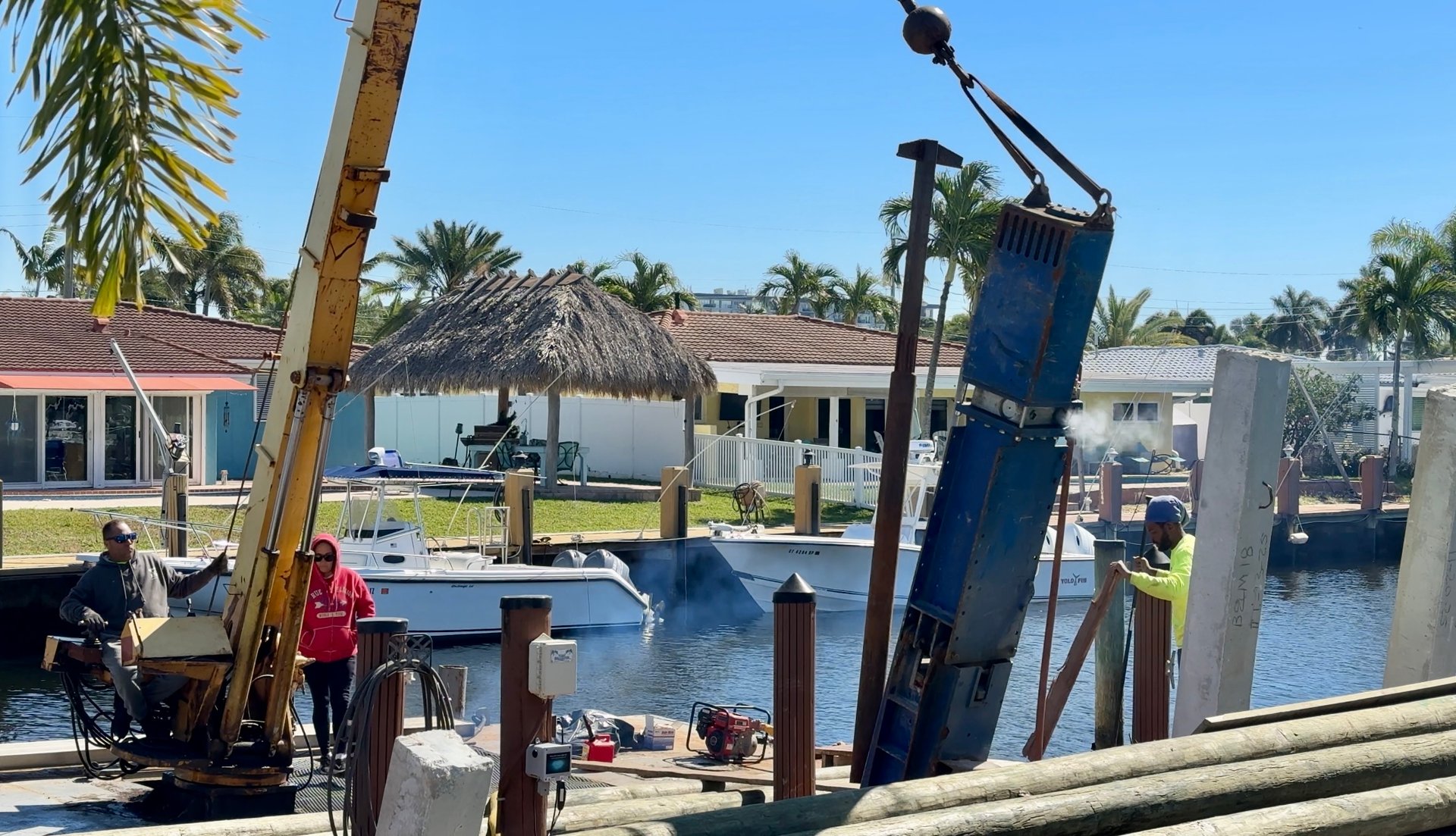
What does permitting and engineering usually cost?
Permitting is one of the most overlooked parts of waterfront projects.
Across most cities in South Florida, owners should expect:
Engineering and surveys
$3,000 to $8,000 or more
Permit and application fees
$1,500 to $5,000 or more
Agency coordination and environmental review, when required
Additional professional fees may apply depending on the property and scope
A realistic combined range for permitting and engineering alone is:
$5,000 to $12,000 or more, before any construction begins.
How long does the approval process take?
For most seawall, dock, and lift projects in this region:
Typical permitting timeline
Three to six months
Some projects take longer if revisions are required or multiple agencies are involved.
Once permits are approved, construction usually follows this general timeline:
-
seawall replacement: two to four weeks
-
dock rebuild: one to three weeks
-
boat lift installation: several days to one week
The key takeaway is simple.
These are not quick upgrades that can be decided and completed in a few weeks.
How much value do these improvements actually add when selling?
In today’s South Florida waterfront market, buyers place a premium on certainty.
New or compliant seawalls
A properly elevated and fully permitted seawall frequently returns a very high percentage of its cost. More importantly, it helps protect the full land value of the property and dramatically reduces buyer hesitation during inspections.
In many canal and Intracoastal neighborhoods, a new seawall can be the difference between strong competition and repeated price negotiations.
Updated docks and boat lifts
Compliant, well-designed dock and lift systems consistently:
-
increase buyer demand
-
expand the pool of buyers who actually own boats
-
improve how a property compares to competing listings
In boating communities such as Pompano Beach and Lighthouse Point, properly designed dockage can add tens of thousands of dollars in real and perceived value, especially for buyers who want to use the water immediately.
Insurance and long-term ownership are changing the conversation
Another important shift across South Florida is how insurers view waterfront risk.
While every policy is different, infrastructure condition is increasingly part of underwriting and renewal decisions. Older seawalls and unpermitted waterfront structures can create challenges when policies are reviewed.
Waterfront ownership today should be viewed as a long-term asset that requires capital planning, not just routine maintenance.
The upside of this new era of waterfront living
Despite the added complexity, this remains one of the most desirable waterfront regions in the country.
South Florida offers:
-
direct access to the Intracoastal Waterway
-
short runs to inlets and open ocean
-
a true year-round boating and outdoor lifestyle
-
strong long-term demand for limited waterfront inventory
Higher construction and permitting standards ultimately help protect property values and improve long-term resilience.
For buyers, they create clarity about what you are purchasing.
For sellers, they create an opportunity to differentiate a properly maintained and documented property.
The bottom line for buyers and sellers
From West Palm Beach to Fort Lauderdale, waterfront real estate is no longer just about location and view.
It is also about:
-
seawall age and elevation
-
permits and engineering
-
dock and lift compliance
-
long-term infrastructure planning
Understanding these factors before making a move can protect your investment and prevent expensive surprises later.
Connect With Joe Lanser
Joe Lanser, P.A.
Lanser-Caicedo Group | RE/MAX Direct
LanserHomeSales.com
[email protected]
954-864-4465