Deep water. Fixed bridge. Canal access. Intracoastal. Ocean access. These are not interchangeable terms, and the differences between them will determine what boat you can own, how you live day to day, and what you pay. Here is what every waterfront buyer in South Florida needs to understand before making a decision.
When buyers tell me they want a waterfront home in South Florida, the first question I ask is not about budget or bedrooms. It is about the boat. Because the boat determines everything else. The type of vessel you own, or plan to own, will filter your options faster than any other criteria in this market. And if you do not get that alignment right upfront, you can end up with a beautiful home on the water that your boat cannot actually use the way you intended.
South Florida has one of the most complex and layered waterfront real estate markets in the country. We live on it. We work on it. And the differences between the various types of waterfront access here are real, consequential, and not always obvious to buyers coming from out of state or from non-coastal backgrounds. Let me break it down the way I would explain it to a client sitting across from me.
The Types of Waterfront Access in South Florida
There are essentially four categories of waterfront property in our corridor, each with a distinct relationship to the water and to boat access. Understanding which one you are looking at changes the entire evaluation of a property.
Type 01 · Deep Water, No Fixed Bridges
Unrestricted Ocean Access
The most sought-after and most expensive category. These properties sit on the Intracoastal Waterway or on deep canals with direct access to the ICW, and the route from the dock to the ocean has no fixed bridges to limit the height of your vessel. The water is deep enough for a large sportfisher, a sailing yacht, or a full-size motor yacht.
Who it is for
Serious boaters with larger vessels. Sailboats with tall masts. Owners of 50-foot-plus motor yachts or sportfishers. Anyone who wants zero limitations on what they can own and run from their dock. Luxury buyers who treat the dock as seriously as the home.
Examples in our corridor
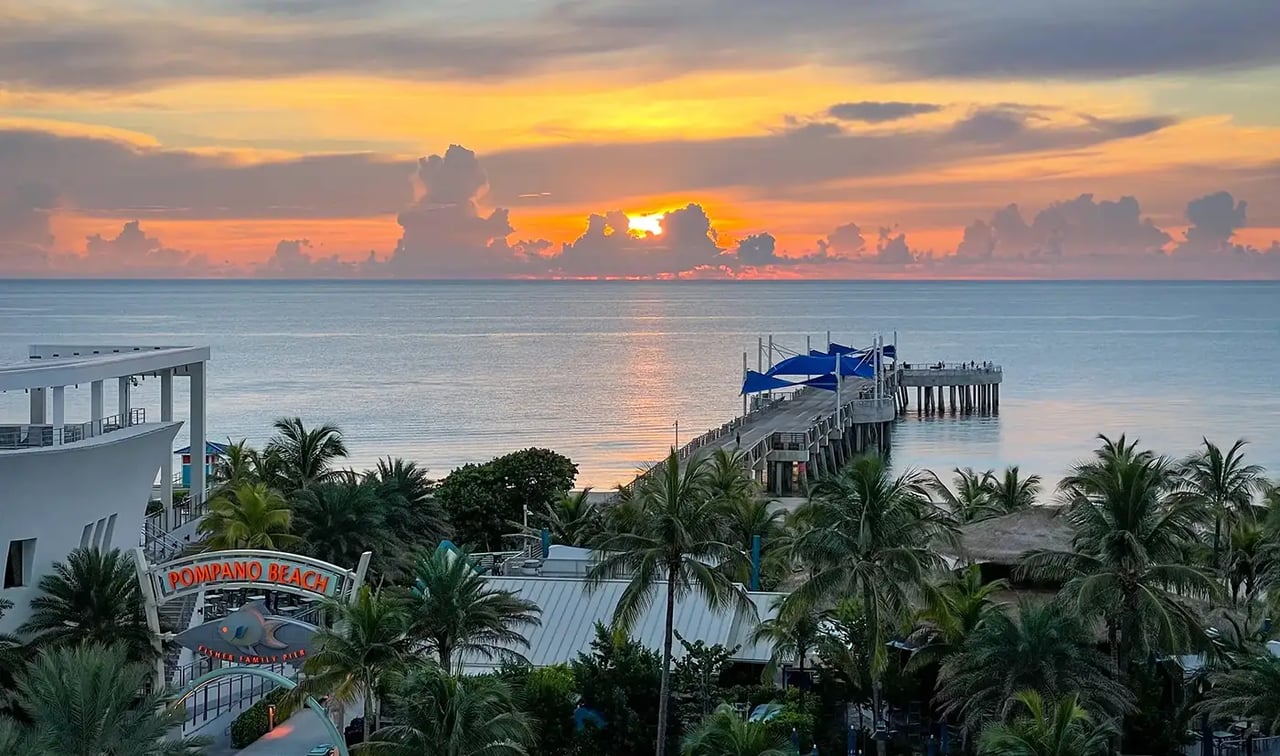
Las Olas Isles (Fort Lauderdale), Pompano Beach Isles, Lighthouse Point (most routes), Harbor Beach (Fort Lauderdale), Palm Beach waterfront estates, Boca Raton deep-water canal homes.
Type 02 · Canal Access with Fixed Bridges
Restricted by Air Draft
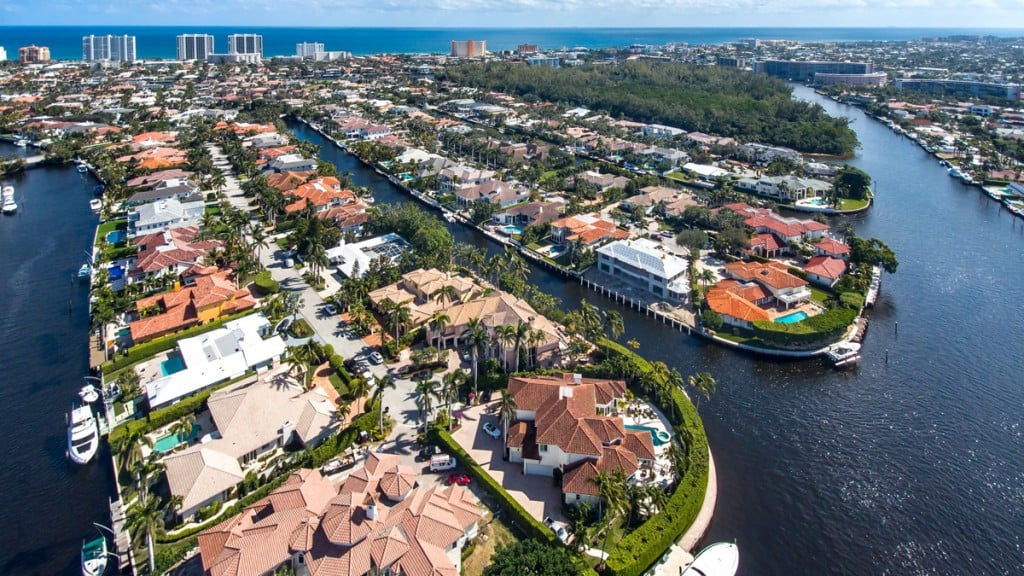
These are canal-system homes where at least one fixed bridge stands between the dock and open water. The critical number here is air draft, which is the height from the waterline to the highest point of your vessel. If your boat clears the bridge, you have access. If it does not, you are limited to the canal system behind the bridge.
Fixed bridge clearances in South Florida vary widely. Some are 10 to 12 feet. Others are 21 to 25 feet. The Federal Highway bridges that cross many of our canals typically offer 10 to 12 feet of clearance. That works fine for a center console, a flats boat, or a mid-size fishing boat. It rules out large sportfishers, any vessel with a tower, most sailboats, and full-size motor yachts.
Who it is for
Center console owners. Flats fishermen. Families with smaller recreational boats. Buyers who want the waterfront lifestyle and the quiet of a canal without paying the premium for unrestricted ocean access. First-time waterfront buyers entering the market at a more accessible price point.
Examples in our corridor
Garden Isles (Pompano Beach), parts of The Cove (Deerfield Beach), many Hollywood and Hallandale canal communities, portions of Coral Ridge (Fort Lauderdale).
Type 03 · Direct Intracoastal Frontage
Open Water, High Visibility, High Traffic
Homes with direct frontage on the Intracoastal Waterway itself, not on a side canal feeding into it. The views are often spectacular and the prestige is real. But the Intracoastal is a working waterway with commercial boat traffic, sport fishing vessels, personal watercraft, and weekend parade boats. That traffic creates wake, noise, and a very different daily experience than a quiet finger canal.
Who it is for
Buyers who prioritize views and dock access over privacy and quiet. People who enjoy the energy of being on the main waterway. Deep-water boaters who want immediate access from the dock to the ICW without navigating any canals. Buyers comfortable with the tradeoff of visibility for access.
What to know
Wake from passing vessels affects dock structure over time and can complicate boarding and departing in certain conditions. Seawall maintenance is more intensive. Privacy is limited on the water-facing side. The views are typically unobstructed and extraordinary.
Type 04 · Ocean or Beachfront
Atlantic Frontage, No Dock Access
Oceanfront properties offer the most dramatic setting on the entire corridor, with uninterrupted Atlantic views and direct beach access. However, they typically do not offer private dockage. The ocean is not a place to tie up a boat. If you want both ocean views and a private dock, you are looking at properties that front the beach on one side and have canal or Intracoastal access on the other, which exist but are rare and priced accordingly.
Who it is for
Buyers for whom lifestyle and views are the priority over private boating. High-rise condo buyers on A1A. Second-home buyers who want the beach experience without the complexity of managing a boat and dock. Buyers coming from landlocked markets who want the full coastal aesthetic.
Type 05 · Waterfront Condos & Townhomes with Slip Access
The Often-Overlooked Option
Not every path to waterfront living in South Florida involves a single-family home with a private dock. A growing segment of the market offers waterfront condos and townhomes that include a deeded boat slip or access to a shared marina on the property. These communities give buyers the boating lifestyle at a lower entry point, without the full responsibility of seawall maintenance, dock upkeep, and the infrastructure costs that come with private waterfront ownership.
The slip situation varies by development. Some communities offer a deeded slip that transfers with the unit and is yours to use exclusively. Others offer slips on a first-come, first-served or lease basis through the HOA. Some have a waiting list. It is critical to understand exactly what the slip arrangement is before buying, because there is a meaningful difference between owning your slip and having access to a shared marina.
Who it is for
Buyers who want the boating lifestyle without the full cost and maintenance of a single-family waterfront home. Snowbirds and second-home buyers who want to keep a boat in South Florida without managing a whole property. Buyers entering the waterfront market for the first time. Anyone who prefers the lock-and-leave convenience of a condo but still wants their boat close.
What to check
Whether the slip is deeded or HOA-managed. Maximum boat length and beam allowed in the slip. Water depth at the slip. Bridge clearance on the route out. Monthly HOA fees covering dock and marina maintenance. Whether liveaboards are permitted. These details are buried in the condo docs and are easy to miss without the right guidance.
The Fixed Bridge Question: What Can You Actually Run?
This is where buyers most often get surprised, and where the difference between a great purchase and a frustrating one comes down to one conversation that did not happen early enough in the process.
Air draft is the measurement that matters. It is the total height of your boat from the waterline to the highest fixed point, whether that is a tower, an antenna, a mast, or the top of a hardtop. If that number exceeds the clearance of the lowest fixed bridge between your dock and the ocean, that bridge is your ceiling.
Fixed Bridge Clearance: What Passes and What Does Not
10 to 12 Feet of Clearance (Common in South Florida canal systems)
Passes: Center consoles, flats boats, small fishing boats, pontoons, kayaks and paddleboards
Does not pass: Sportfishers with towers, large motor yachts, sailboats with masts, boats over 10 to 12 feet of air draft
21 to 25 Feet of Clearance (Some higher-span bridges)
Passes: Mid-size sportfishers without towers, most express cruisers, many mid-size motor yachts
Does not pass: Sailboats with full masts, large sportfishers with tall towers, mega yachts
No Fixed Bridges (Unrestricted ocean access)
Passes: Everything. Full-size motor yachts, tall sailboats, sportfishers with outriggers and towers, mega yachts up to the depth of the canal. Only water depth becomes a limiting factor.
We personally live on the canal system in Pompano Beach, and we love it. We have one fixed bridge on our route to the Intracoastal, and for the type of fishing vessel we run, it is a non-issue. The bridge does not affect us. But if we wanted to run a sportfisher with a tower, or a tall sailboat, that property would not work for us. The lesson is not that one access type is better than another. The lesson is that the right access type is entirely determined by how you plan to use the water.
Canal vs. Intracoastal: The Daily Living Difference
Beyond the boat question, there is a lifestyle question. And it is one that buyers often underestimate until they have lived on both types of water.
Other Things That Matter More Than Most Buyers Realize
Beyond access type and bridge clearance, there are a handful of factors that meaningfully affect the day-to-day experience of waterfront ownership and the long-term cost of the property.
Seawall condition and age. The seawall is the structural wall between your property and the water. An aging or failing seawall is expensive to repair or replace and can affect property value significantly. Always have it inspected. Know the last time it was rebuilt and who owns the responsibility for maintaining it.
Dock configuration and age. Fixed docks, floating docks, davits, boat lifts — each has different maintenance needs, different suitability for different vessel types, and different permit implications if you want to modify. Check dock age and whether it is permitted.
Water depth at the dock. In South Florida, canal depth varies. Some canals are regularly dredged and maintain 6 to 8 feet of depth. Others have silted in and may only have 4 feet or less at low tide. For a deep-V hull or a vessel that drafts more than 3 feet, this is a dealbreaker that is missed when buyers only visit at high tide.
Bridge clearance at high tide. Fixed bridge measurements are typically given at Mean Low Water, meaning the clearance is less at high tide. If the listed clearance is 12 feet and your boat has 11 feet of air draft, you may be unable to pass at high tide even though the clearance number technically works on paper.
Insurance implications. Flood zone designation, proximity to open water, seawall condition, and dock configuration all factor into flood and wind insurance premiums. On a waterfront property, insurance costs can be a significant part of the monthly carrying cost. Understand the full picture before closing.
Which Type Is Right for You?
There is no universal answer. But there is a framework I use with every waterfront buyer I work with, and it starts with three questions.
What is your boat, and what is your boat's air draft? If you do not have one yet, what do you plan to own? Get specific. The difference between a center console and a sportfisher with a tower is the difference between a $600K canal home and a $1.5M deep-water property.
How do you want to live on the water? Do you want quiet mornings and privacy? A canal community is probably your place. Do you want the front-row view of the main waterway and immediate access from your dock? Direct Intracoastal frontage is worth the premium for you.
What is your tolerance for ongoing maintenance? Waterfront ownership is more maintenance-intensive than inland ownership. Seawalls, docks, lifts, and the general effect of salt water on everything near it require attention and budget. The more exposed to open water you are, the more this factor compounds.
And do not overlook the condo and townhome market with slip access. For buyers who want the boating lifestyle without the full overhead of a single-family waterfront home, this is one of South Florida's most underrated entry points. A well-located condo with a deeded slip on a canal with ocean access can deliver the experience at a fraction of the cost.
When those answers are clear, the right type of waterfront property becomes obvious. And that is the conversation I want to have with you before we ever look at a listing.
Let's Find Your Place in Paradise.
I have spent years navigating this waterfront market, and I know the difference between a great waterfront buy and one that looks good on the surface but does not deliver in practice. If you are thinking about waterfront in South Florida, let's talk through it properly before you start looking at listings.